

Direct Heat Cooker Buying Guide: What to Look For

A direct heat cooker is worth buying on four numbers: how much grate you get for the money, how well it holds heat, how much control you have over the fire, and what it costs to actually start cooking. This guide walks through each one, so you can measure any cooker against them, ours included.
What a direct heat cooker is
A direct heat cooker puts the fire and the food in the same chamber. Charcoal or wood burns below the grate, the meat cooks above it, and the drippings hit the coals and come back up as flavor. You'll also see them called box smokers, hot boxes and direct-fire pits. It's the same family. If you want the full picture of how they work, start with our direct heat smoker guide.
They suit people who want real fire-cooked flavor without babysitting an offset all day. Most cooks run hotter and faster than a traditional smoker, but a well-designed direct heat cooker will also do a long, low cook when you give it a smaller fire and more distance from the coals.
1. Grate area: the first number to check
Grate area tells you how much food fits in one cook, and it's the one spec every builder can give you in plain numbers. Multiply the grate's width by its depth to get square inches, then ask two follow-up questions:
- Is there a second level, and is that grate included? A second grate can nearly double your space for things like ribs and wings.
- What's the price per square inch? Divide the price by the grate area that comes with it. It's a quick way to compare cookers of very different sizes.
Then count the cooking modes. Grate area tells you how much fits. Cooking modes tell you how many ways you can cook it: direct heat, two-zone, offset-style, reverse flow and so on. Count only the modes a cooker handles out of the box, without buying accessories or upgrades or modifying it. Then divide:
Cost per sq in per mode = price ÷ grate area ÷ out-of-box cooking modes
Lower is better. Two cookers with similar grates can land far apart once you count what each one can actually do on day one.
Be wary of capacity charts that promise a set number of chickens or briskets. They're math on a perfect day, not cooking. How much fits depends on the cut, how tightly you pack it and how you use both levels. Square inches are the honest comparison.
2. Holding heat: start with the lid
Heat rises, so the lid is where a direct heat cooker loses the most. That makes lid construction at least as important as wall thickness.

- Body steel decides the weight. Thicker walls make a heavier, more permanent cooker. On a well-built cooker with an insulated lid, a lighter body cooks the same. The difference is how much it weighs and how easily you can move it.
- An insulated lid stops the leak. Two layers of steel with an air gap between them slow the heat escaping through the top, which means less fuel and steadier temperatures, especially on cold or windy days.
- A gasket seals it. A high-temperature gasket around the lid keeps heat and smoke where they belong.
So ask any builder what the lid is made of, not just the walls. The lid decides how well the cooker holds heat; the body gauge decides how much it weighs.
3. Fire control: where the fire sits and how you shape the heat
A direct heat cooker is only as versatile as your control over the fire. Look at three things.
- Where the fire lives. A fixed fire drawer is simple and repeatable. A movable basket lets you put the fire anywhere, so you can run a hot zone and a cool zone, or shift the fire mid-cook. More than one drawer lets you fire just part of the cooker.
- Tuning plates or diffusers. Plates between the fire and the grate spread and soften the heat. More plates means more ways to set up the cooker, from searing hot to gentle and even.
- Airflow. Intakes feed the fire and exhausts pull heat and smoke across the food. Adjustable vents on both ends are what let you hold a temperature instead of chasing it.

If you mostly cook for two but sometimes for a crowd, fire control matters more than size. A big cooker you can fire one section of is often more useful than a small one you outgrow.
4. Size, weight and mobility
Measure your patio before you fall in love with a cooker. Check the body width and depth, then allow room for handles, a side table and opening the lid.
Weight is a good sign, not a problem, as long as the cooker rolls. Look for large casters (8" or bigger) rated for the load, and solid handles. A heavy cooker on small wheels is one you'll stop moving.
5. What's included vs. sold separately
The sticker price isn't the cost to cook. Before you compare prices, list what comes in the box and price out what you'd have to add.
Items that are often extra:
- A charcoal basket
- A second cooking grate
- Tuning plates or diffusers
- A thermometer
- Casters
- A cover
- A plancha or griddle, rotisserie kit and side table
A cooker that looks $200 cheaper can end up costing more once you add the basket and grate you need for your first cook.
6. Build time and freight
Most quality steel cookers are built to order, so ask two questions up front.
- How long is the build, and is it a firm date? A clear lead time you can plan around beats a vague one.
- How does it ship, and what does it cost? A cooker that weighs hundreds of pounds ships by freight truck. Ask whether a liftgate to your driveway is included, what the freight cost is to your zip code, and whether local pickup is an option.
7. How hard is it to talk to a real human?
Price and lead time are one thing. The bigger question comes after the cooker is in your yard: when you have a question about your first cook, a part, or a fire that won't behave, how hard will it be to reach a real person?
Support is priceless, and it's the one thing a spec sheet won't show you. Before you buy, call the builder. See who answers, how long it takes, and whether they know the cooker. Ask what happens after delivery: is there a phone number, a person who knows the product, and how-to videos for the questions every new owner has?
At Smokeslinger, the answer is simple: call 762-772-2727 and you'll reach Frank or Lisa. If we can't pick up, we always call back. We take customer service seriously, and we handle it personally.
The checklist
Print this and take it to any cooker you're considering.
- ☐ Grate size (W × D) and square inches, one level
- ☐ Second level available? Grate included?
- ☐ Price per square inch of included grate
- ☐ Cooking modes out of the box, and cost per square inch per mode
- ☐ Body steel thickness
- ☐ Lid: single wall, or double wall with insulation? Gasketed?
- ☐ Fire: fixed drawer, movable basket, or both? Can you fire just part of it?
- ☐ Tuning plates or diffusers: how many, and are they included?
- ☐ Intake and exhaust vents: adjustable on both ends?
- ☐ Body size and height; does it fit your space?
- ☐ Weight, caster size and caster rating
- ☐ Everything included in the price, and the cost of what you'd add
- ☐ Build time, freight cost to your zip and pickup options
- ☐ Can you reach a real person, before and after the sale?
Where the Smokeslinger cookers fit
Dustin McCormack designed the Smokeslinger direct heat cookers, and they're built in his shop in Kaufman, Texas. I've cooked on all three, and I recommend them because they check every box on that list at their price. Here's how they line up, and how to get the most out of each one.
| Slingshot | Mini Smokeslinger | Full Size Smokeslinger | |
|---|---|---|---|
| Price | $1,995 | $2,699 | $3,295 |
| Grate area, 1 level / 2 levels | 528 / 1,057 sq in | 623 / 1,246 sq in | 1,057 / 2,114 sq in |
| Grates included | One 23¾" × 22¼" grate (1 level); second-level grate $99 | Four 14" × 22¼" grates (2 per level, both levels) | Four 23¾" × 22¼" grates (2 per level, both levels) |
| Cost per sq in, included grates | $3.78 ($1.98 with the $99 second grate) | $2.17 | $1.56 |
| Out-of-box cooking modes | 5 | 7 | 7 |
| Cost per sq in per mode | $0.76 ($0.40 with the $99 second grate) | $0.31 | $0.22 |
| Body steel | 1/8" | 1/4" | 1/4" |
| Lid | Double-wall, air-gap insulated, gasketed | Double-wall, air-gap insulated, gasketed | Double-wall, air-gap insulated, gasketed |
| Fire setup | Movable square charcoal basket | Center slide-out fire drawer | Two slide-out fire drawers, one at each end |
| Tuning plates included | 5 | 5 | 9 |
| Body size (W × D), height | 26" × 24", 42" | 30" × 24", 40" | 48" × 24", 43" |
| Weight | About 275 lb | 420 lb | About 700 lb |
All three have 5/16" round-bar grates, 22¼" deep (extra grates $99 each), 8" casters and an 8-week build. They ship by freight to the lower 48 with liftgate service (typically $350 to $1,050 depending on location), or you can pick up in Kaufman, Texas by appointment. Covers are sold separately.
How we counted the modes. Only setups that work with what ships in the price, with no add-ons. Slingshot (5): offset, reverse flow, embers on bottom, 90-minute and reverse sear. Mini and Full Size (7): those five, plus a reverse sear with the fire lifted onto the tuning plates and super high heat searing with the insert on the plates. The plancha is an add-on for all three, so it isn't counted.
Request a Quote
Quote requests get our best shipping price. Or call 762-772-2727.
Slingshot: the most cooker for under $2,000

The Slingshot is the place to start. You get 528 square inches of grate, room for a second level (add the $99 grate and you match one full level of the Full Size), an insulated lid and everything you need for the first cook: the charcoal basket, five tuning plates, a thermometer and casters. It's rotisserie-ready, too.
How to use it: the basket is free-standing, so put the fire where the cook needs it. Center it under the food for steaks and chops, or slide it to one side to create a cooler zone for ribs and chicken.
Know its limit: the Slingshot doesn't have the drawer-and-insert system the Mini and Full Size use for super high heat searing. It sears well over a strong coal bed, but if hard searing is a priority, the Mini is the better fit.
Request a quote on the Slingshot
Mini Smokeslinger: heavy steel in a compact footprint

The Mini steps up to 1/4" steel, the slide-out drawer-and-insert fire system, and both levels of grate included, on a body only 30" wide. If hard searing matters to you, this is where to start.

How to use it: the center fire drawer slides out for easy loading and cleanup. For a two-zone cook, build the fire on the floor to one side, or use the optional Forever basket.
Full Size Smokeslinger: fully optimized for small or large cooks

The Full Size gives you over 1,000 square inches on one level, two fire drawers and nine tuning plates. The most common question we hear is "isn't that too much cooker for just me and my wife?" It isn't. Fire one drawer for a small cook and you only burn what that cook needs. Fire both when the family shows up.
How to use it: with one drawer lit, set the tuning plates to run it like an offset or a reverse-flow on a single fire. With both lit, you have even heat across the whole grate for a full load.
Request a quote on the Full Size
FAQ
What is a direct heat smoker? A cooker where the fire burns directly below the food in the same chamber. The drippings hit the coals and flavor the meat. It's also called a direct heat cooker, box smoker or hot box.
Is a box smoker the same as a direct heat cooker? Usually, yes. "Box smoker" is a common name for the same style of cooker. Some upright cabinet smokers use the name too, so check that the fire sits directly under the food.
How much cooking area do I need? Around 500 square inches handles most family cooks. More area gives you room for a full load of ribs or a crowd, and a second grate level nearly doubles it.
Does thicker steel hold heat better than an insulated lid? The lid matters more. Most heat escapes through the top, so a double-wall, gasketed lid is what holds temperature. Thicker body steel adds weight and heft; on a well-built cooker with an insulated lid, it doesn't change how it cooks.
What's a good first direct heat cooker? One that includes everything for the first cook (basket, plates, grate and thermometer), with an insulated lid and room to grow. That's why the Slingshot exists.
Can you smoke low and slow on a direct heat cooker? Yes. Use a smaller fire, tuning plates to spread the heat, and the upper grate for more distance from the coals.
Is a big cooker wasteful if I'm only cooking for two? Not if you can fire part of it. On the Full Size Smokeslinger, light one end drawer and you only burn the fuel that cook needs.
Every Smokeslinger is built to order. Request a quote on any of the three, or call 762-772-2727 and talk it through with Frank or Lisa.
Request a Quote
More from Smokeslinger
Keep exploring our world of Texas BBQ. Shop our direct heat and offset smokers, dive into BBQ tips from our pitmasters, or request a quote to start your BBQ journey.
Shop BBQ Pits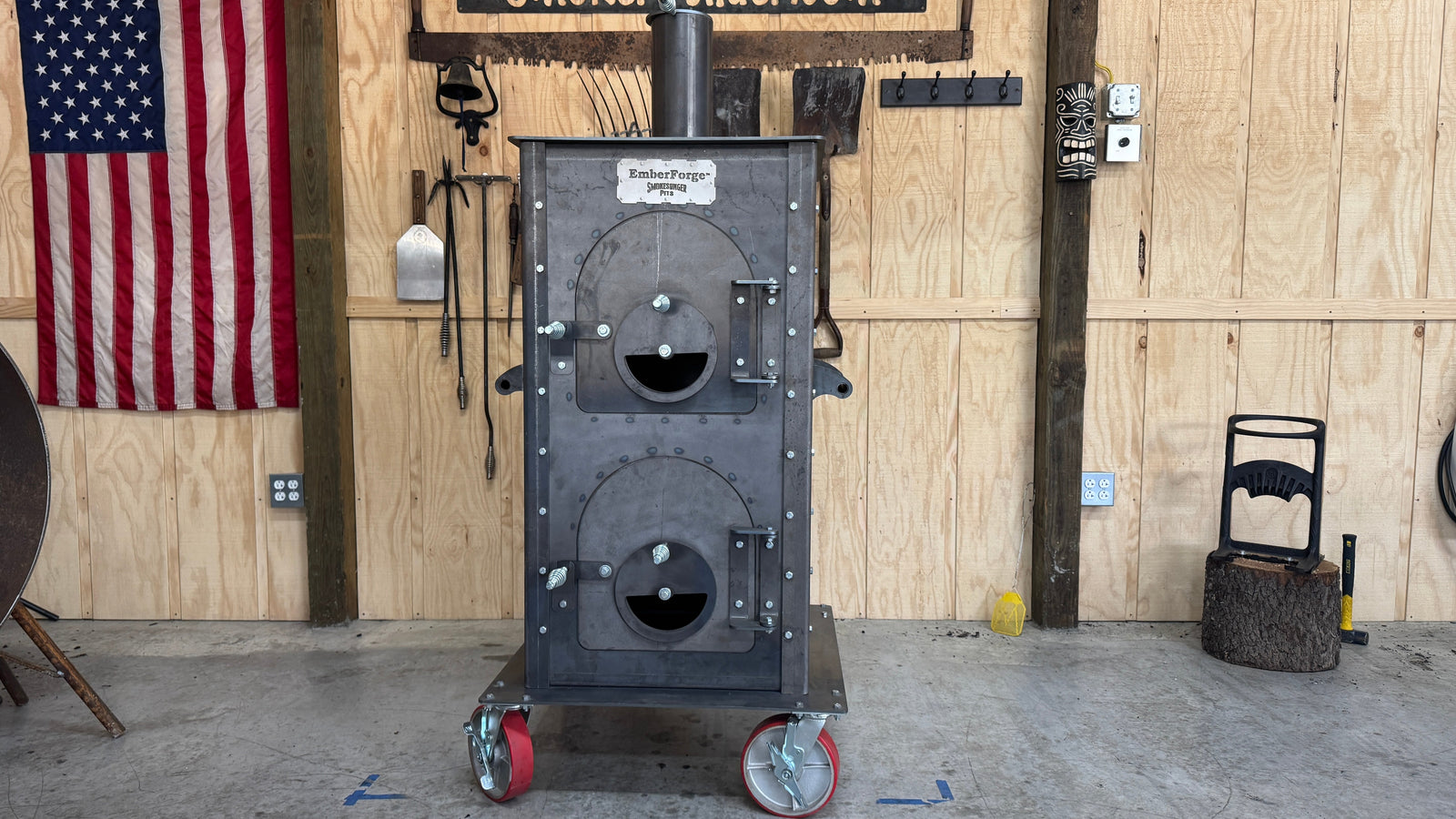

How To Use an EmberForge for Live Ember Cooking (Step-by-Step Guide)
Learn how to use the EmberForge to produce steady, controlled embers for direct heat cooking. This guide breaks down ember production, fire structure, and how to run a consistent ember rhythm for predictable results.
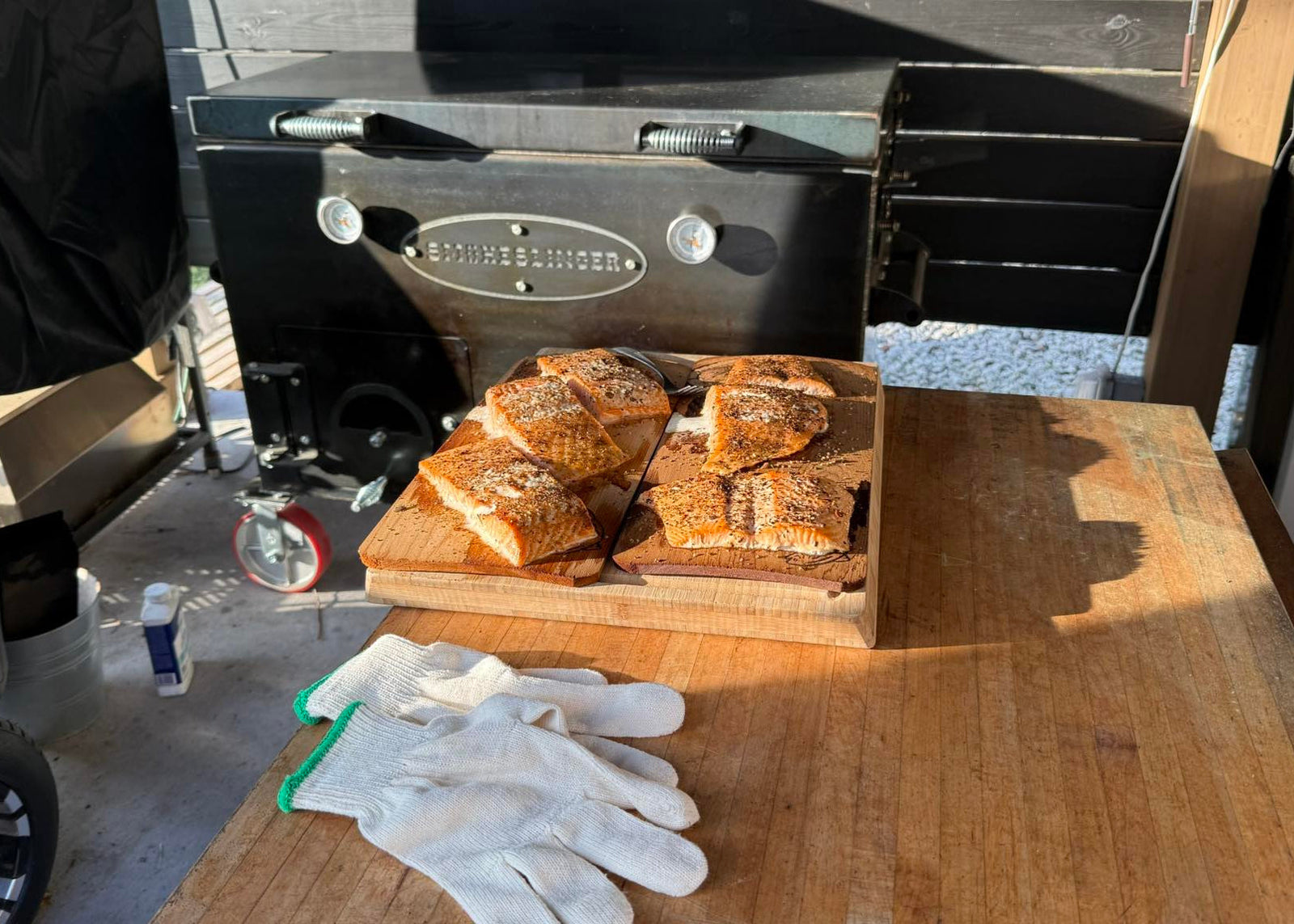

Smokeslinger Owner Spotlight: From Pellet Grill to Easy Direct Heat Cooking
Luc Barrette shares what it’s really like switching from a pellet grill to a Smokeslinger. No complicated process—just steady fire management, simple adjustments, and real results.

Smokeslinger Full Size Review: 9 Powerful Reasons This Direct-Heat Grill Beats Expectations
BBQ influencer Allan Kiezel (FattyButts BBQ) uncrates, sets up, and seasons his Full Size Smokeslinger with Planchas. Here’s my take on his honest feedback — from bar grates and baffle plates to airflow and reverse flow smoker setups — plus practical tips to get yours dialed on day one.